

The time has come, ladies and gentlemen. My guys. My baes. My Boos. Whatever you want to call them. These are the guys I want on as many teams as possible. I’m not saying I’ll overpay, but I’m saying I won’t hesitate to pull the trigger on taking any of them when the price is remotely close to right. Before we head to my 2026 Flag Plants, let’s look back at who I chose last season.
DJ Moore: Chicago Bears
(2025 ADP: WR21, 31 overall)
I compared him to Amon-Ra St. Brown, but he ended up finishing fourth on his own team.
DJ Moore had 50 catches for 682 yards and six touchdowns on 85 targets over 17 games. He finished as WR35 overall and WR46 in points per game. Both his catches and yards were career lows. His target share dropped to 16%, the lowest since his rookie year, and set a career-worst in yards per route run. Chicago traded him to Buffalo for a second-round pick in March, which basically means the league noticed the same issues.
The worst part is that I wrote out the counterargument and then ignored it. I brought up the fact with Colston Loveland, Luther Burden III, and Rome Odunze that there will be “plenty of competition for targets” and then proceeded to spout four paragraphs explaining why it didn’t matter. I also made a slot pun and a “Gimme Moore” joke in that section. Honestly, no one cringed more than I did.
Having the right information but coming to the wrong conclusion feels worse than not having the information at all.
Verdict: Miss
Michael Pittman Jr: Indianapolis Colts
(2025 ADP: WR50, 92 overall)
I said the hate had gone way too far and that Michael Pittman Jr. was being drafted under his floor. Eighty catches, 784 yards, a career-high seven touchdowns on 110 targets. WR26 in points per game, inside the top 20 overall, from a WR50 price tag. Through 10 weeks, before the roof caved in, he was the WR9 in points per game with a 21% target share.
Then Daniel Jones tore his Achilles, Philip Rivers came out of retirement to play quarterback, and Pittman caught 9 passes for 74 yards over the final three games. He did all of that with a fractured back and a hamstring injury he picked up along the way.
I joked about him being drafted in the 90s (not the greatest music decade of all time, just as one of the players taken after pick 89 but before 100), the 90th player off the board. The real punchline was that he spent December catching passes from a quarterback who graduated high school in the 90s. I probably don’t deserve credit for that, but I’m claiming it anyway.
Verdict: Hit
Zay Flowers: Baltimore Ravens
(2025 ADP: WR30, 54 overall)
I predicted that Zay Flowers could easily finish in the teens, and he did even better. Flowers ended up as WR12 in points per game and WR7 in half PPR, setting career highs in catches (86), yards (1,211), targets (118), yards per route run, and yards per target. He ranked eighth in target share at 27.7%, seventh in yards per route run, and 10th in first-read share. Baltimore gave him four years and $140 million, so it’s clear others agree.
Here’s where I completely missed the mark. I focused the whole section on volume, yards after the catch, and explosive plays, but never mentioned touchdowns. Flowers scored five, and he’s never had more than five receiving touchdowns in a season. He had 11 red zone targets all year. He finished as WR12 despite struggling with the most important part of a receiver’s job, which could be a big warning sign or the main reason to believe in him for 2026. I still can’t decide which.
Verdict: Hit
Jaylen Waddle: Miami Dolphins
(2025 ADP: WR29, 52 overall)
Everything I hoped for happened, but it still didn’t work out.
Jonnu Smith was gone. Tua was healthy enough to start. Tyreek Hill, who I noted was turning 31 and might want out, dislocated his knee and tore several ligaments in Week 4. That gave Waddle the clear WR1 role I’d been waiting three years to see. I got everything I wanted, plus a surprise I never expected.
He caught 64 passes for 910 yards and six touchdowns on 99 targets over 16 games. That averaged out to about 12 points per week. He had three top-12 finishes, but also seven weeks outside the top 36.
And the efficiency argument was correct, which is what makes this so frustrating. His average depth of target rose to 13.2, and his yards per catch returned to 14.2. He played well, but the offense struggled badly. Tua threw 13 interceptions in 10 games, Miami stalled, and they traded Waddle to Denver in March.
Verdict: Miss
2-2, but there’s a trend developing.
I’ve now gone back through three positions, and the same thing keeps happening. I’m right about the player. I’m wrong about a lot around him.
Trevor Lawrence delivered, but it was Coen and nine rushing touchdowns that made the difference, not the receivers I focused on. Mahomes was a value, but he produced with his legs instead of the deep passes I expected. Kenneth Walker did everything I predicted underneath and improved his yards per carry by almost a yard, but Zach Charbonnet took the volume and the touchdowns disappeared. Jaylen Waddle got every condition I wanted and still finished outside the top 30 because the offense around him fell apart.
Moore is the exception, and it’s not a good one. In his case, I actually had the right context in my own notes, wrote it down, and still convinced myself to ignore it.
So what’s the actual lesson here? Talent wins… most of the time. There are a million and a half ways to get where you’re going, and when you’ve got real difference-makers on the roster, you can draw up one route in August and end up somewhere completely different in December. That’s not a flaw; it’s what happens when your roster is filled with talent. Stop drafting the plan and start drafting the player.
Let’s dive in.
Justin Jefferson – Minnesota Vikings
I won’t spend long on how bad 2025 was. It was the worst full season of his career, and the fact that 29 receivers averaged more PPR points per game than Justin Jefferson tells you everything you need to know.
There’s a very obvious reason for it.
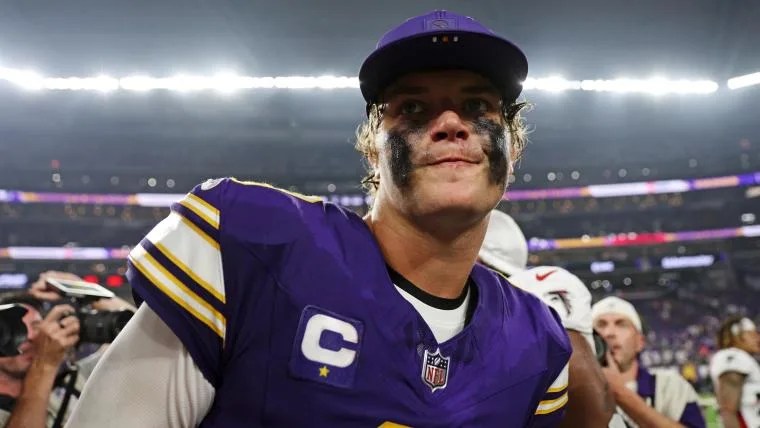
Minnesota cycled through JJ McCarthy, Carson Wentz, and Max Brosmer, and Jefferson still caught 84 balls for 1,048 yards while commanding a 31% target share. He scored twice, and his yards per catch fell to 12.5, a career low. Here’s the stat that ends the conversation: Jefferson averaged 11.0 points per game with McCarthy under center and 18.9 with anybody else.
Minnesota saw the same thing you did and brought in Kyler Murray, who won the so-called competition and was named the Week 1 starter in mid-August. Murray has his shortcomings: Arizona released him after a season with career-worst passing numbers and a stretch on the bench behind Jacoby Brissett, and the deep ball is still a legitimate question. He also signed for the veteran minimum, which is not the market’s vote of confidence. None of that matters much when the bar is “throw a catchable football to Justin Jefferson,” and McCarthy couldn’t clear it.
Jefferson has praised Murray’s athleticism and pocket movement all camp.
The Kyler Murray & Justin Jefferson connection might truly break the league pic.twitter.com/9UM9MlbYP1
— Cam (@42Cyc) August 20, 2026
That’ll do.
I’m not afraid to just write last season off. Jefferson was the WR9 in points per game as a rookie and finished top five in each of the four seasons after that, and he did it with Nick Mullens, Sean Mannion, Joshua Dobbs, and Jaren Hall taking snaps along the way. The talent was never the issue. The only thing that slows Jefferson down this year is the release of Call of Duty: Modern Warfare 4.
(Note: He’s been managing a hamstring strain since late July and Week 1 isn’t officially confirmed, but nobody’s treating it as a long-term problem).
Ladd McConkey: Los Angeles Chargers
Ladd McConkey was about as consistent as a Michael Scott vasectomy last season.
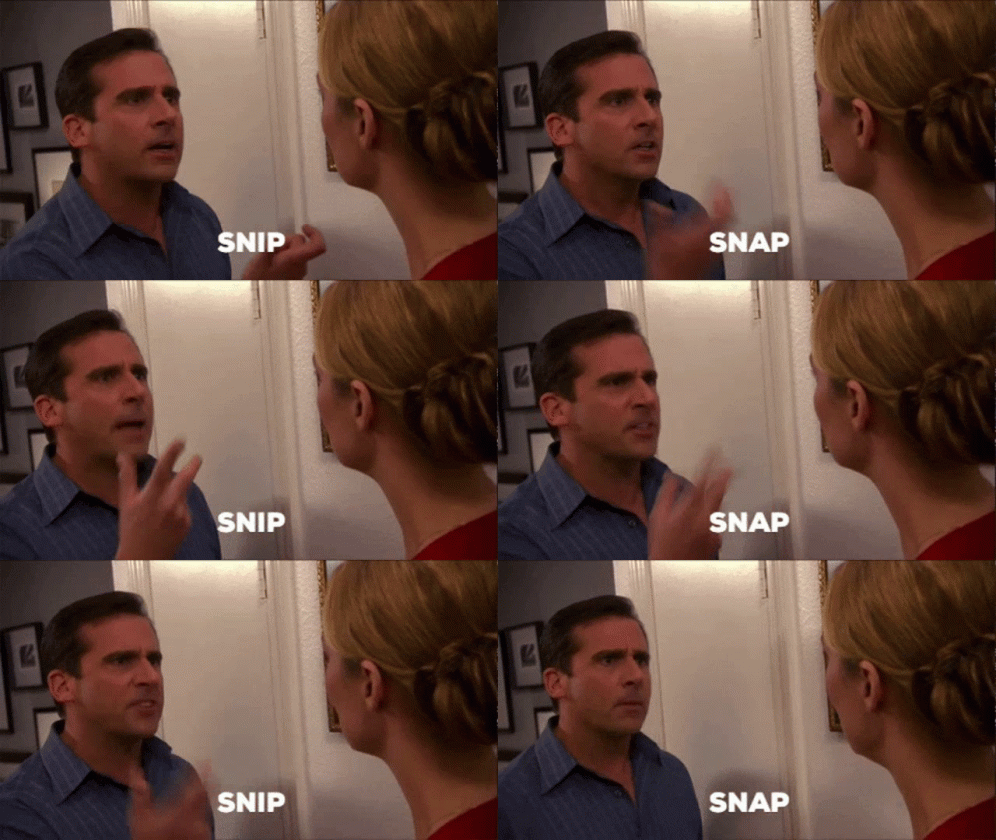
He was under 10 points in three of the first four weeks and four of the final six. In between, he put up five games over 14 points in a six-week stretch with three 20-point performances. If you started him, you either won by 30 or lost by two. There is no in between.
Here’s what was actually happening. The Chargers’ offensive line was a hospital ward. Justin Herbert took 54 sacks, faced a league-high 263 pressures, and played the last month with a broken hand. It is difficult to run precise timing routes for a quarterback who is being tackled. But McConkey was still elite when the ball found him. He was one of only six receivers with 100-plus targets and at least 4.5 yards after the catch per reception. The other five are Puka Nacua, Amon-Ra St. Brown, Ja’Marr Chase, Justin Jefferson, and Jaxon Smith-Njigba. That’s it. And those guys are pretty good at football.
Now Mike McDaniel is running the offense. Quick throws, horizontal concepts, get the ball out under 2.4 seconds and let the talent work. There is not a scheme in football better designed for what McConkey already does. He also said the quiet part out loud in camp: “I got healthy this summer. We’re rolling.” He played through injuries all of last season and into the summer, and that’s finally behind him. Keenan Allen is gone. Harbaugh is out here saying it could be the biggest season of McConkey’s career.
Healthy, perfect scheme, quarterback who finally has time. Plant it.
Emeka Egbuka: Tampa Bay Buccaneers
The first half of Egbuka’s rookie year was one of the best I’ve ever seen. Three 20-point games in his first five, including a 30-burger, averaging 15.4 points per game through Week 8. Then it fell off a cliff, from Week 10 on, averaging 8.1.
Look closer at why, because you may be surprised. Egbuka still saw seven or more targets in seven of his 10 games down the stretch. Mike Evans and Jalen McMillan coming back cut his target share to 13.5%, and even then he led the entire team in yards after the catch per reception and finished second in yards per reception. He wasn’t playing worse; things got crowded again.
And now the room isn’t crowded. Evans signed with the 49ers. Egbuka and Chris Godwin are Baker Mayfield’s top two options, and Godwin has his own availability history. The target share that fell to 13.5% has nowhere to go but up, on a rookie who was a top-15 fantasy receiver when he actually got fed. WR1 overall isn’t an impossible outcome, even if it’s unlikely.
Note: Egbuka sprained a toe on August 12 when his foot got rolled up in the Jets joint practice. A specialist called it stable, Todd Bowles has it at day-to-day or week-to-week, and Tampa sounds optimistic about Week 1. It’s trending fine, but it isn’t 100% resolved.
A.J. Brown: New England Patriots
Everyone spent 2025 talking about the drama, and nobody looked at the box score. Brown finished as the WR11 in points per game with his fourth straight 1,000-yard season and seven touchdowns for the third year in a row. That’s four consecutive years finishing top 15 in points per game as an Eagle. He also has not finished lower than seventh among receivers in target share in any of his seven NFL seasons, and he’s been in the 80th percentile or better in yards per route run every single year.
Then Philadelphia traded him to New England for a 2028 first and a 2027 fifth. They waited until after June 1 so they could split the $43.5 million dead cap hit across two years, which tells you how badly both sides wanted out.
The fit is almost too clean. Drake Maye finished second among quarterbacks in fantasy points per game last season and throws one of the best deep balls in the league, which is exactly where Brown eats. He’s reunited with Mike Vrabel from the Tennessee days. And New England has averaged 26.1 rush attempts per game since 2022 against Philadelphia’s league-leading 31.6, so the raw passing volume is going up before you account for anything else.
Is there juice left at 29? Stud receiver, ugly exit, gets shipped to New England, paired with a quarterback who can actually throw it deep.
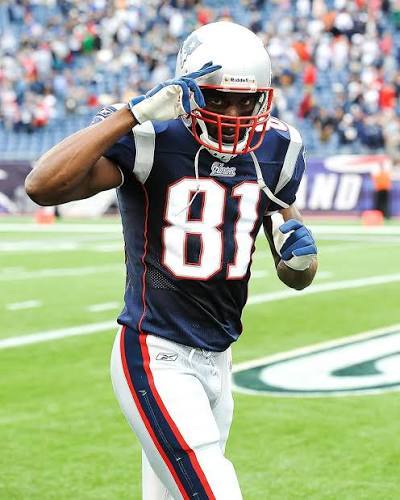
I’ve seen this movie before, and I liked the ending.
Photo by Jaiden Tripi | Adapted by Parker McDonald (@CarbonFoxGFX on Twitter/X)